Cognitive Benefits of Engaging with Tech as You Age with Dr. Michael Scullin







The Digital Workout: Why Your Smartphone is a Shield Against Dementia
In this episode of Specifically for Seniors, Dr. Larry Barsh sits down with Dr. Michael Scullin, a Professor of Psychology and Neuroscience at Baylor University, to tackle a common frustration among the "Digital Pioneer" generation: the steep learning curve of modern technology.
While many seniors feel tempted to set their smartphones aside out of frustration, Dr. Scullin’s research suggests that the "headache" of learning a new app might actually be the most important workout your brain gets all year.
The heart of the conversation centers on a massive meta-analysis of over 400,000 adults. The data is hard to ignore: regularly using computers and smartphones is linked to a 58% lower risk of cognitive impairment. Dr. Scullin explains that this isn't just about "playing games"; it’s about Technological Reserve. Much like "Cognitive Reserve," the effort required to navigate a software update or master a new interface builds neural resilience, helping the brain stay sharper for longer.
One of the most enlightening parts of the interview addresses the fear that GPS and digital calendars act as "crutches" that rot our memory. Dr. Scullin reframes these tools as "Digital Scaffolding." By offloading the stress of remembering appointments or navigating new streets to our devices, we free up our cognitive resources for higher-level thinking and social engagement. Using a device to remember a friend’s birthday isn't "cheating"—it’s ensuring you remain an active, connected member of your community.
How to Overcome the Tech BarrierFor those feeling overwhelmed or even facing mild cognitive impairment, Dr. Scullin offers a roadmap for "gentle entry" into the digital world:
The Right Environment: Learning should happen in a quiet room, free of distractions.
The Right Teacher: Often, a patient friend or a professional trainer is better than a family member, as it removes the emotional baggage from the learning process.
The "One Thing" Rule: Don't try to master the whole phone. Start with something rewarding, like digital photography, and only move on once you feel comfortable.
A Framework for the Future
As we look toward a future filled with AI and ever-changing gadgets, Dr. Scullin encourages seniors to evaluate new technology through three simple questions:
Is it mentally stimulating? (Even if it’s a bit frustrating.)
Does it connect me to others? (Rather than isolating me.)
Does it help me stay independent?
By embracing the struggle of the digital world, the "Digital Pioneer" generation isn't just keeping up with the grandkids—they are actively building a fortress around their cognitive health.
Sponsorship and advertising opportunities are available on Specifically for Seniors. To inquire about details, please contact us at https://www.specificallyforseniors.com/contact/ .
Disclaimer Unedited AI Transcript
Larry (00:07):
You are listening to specifically for Seniors, a podcast designed for a vibrant and diverse senior community. I'm your host, Dr. Larry Barsh.
New Speaker (00:18):
. Join me in a lineup of experts as we discuss a wide variety of topics that will empower, inform, entertain, and inspire as we celebrate the richness and wisdom of this incredible stage of life.
Larry (00:40):
If you've ever felt like throwing your smartphone across the room, because a simple update changed everything you are, you are not alone. For many of us, these gadgets feel less like tools, more like expensive, confusing puzzles. It's incredibly tempting to just set the phone down and say, well, I've lived a full life without an app for every little thing. So why start now? But what if the very frustration you feel while navigating a new app is actually the best workout your brain has had in years? Our guest today is here to tell you that the headache of learning new technology might just be the best thing that ever happened to your cognitive health. Based on a groundbreaking report featured in the Washington Post, this past November, we're diving into why you should not only use technology, but actually embrace the struggle of it as you age. The data is hard to ignore for the digital pioneer generation that's us regularly using computers and smartphones is linked to a staggering 58% lower risk of cognitive impairment. Joining us to explain the science behind this is Dr. Michael Cullin. Dr. Cullin is a professor of psychology and neuroscience at Baylor University and the director of the Sleep Neuroscience and Cognition Laboratory. He's a world renowned expert on cognitive longevity, and his recent meta-analysis of over 400,000 adults is completely flipping the script on aging in a digital world. Welcome to specifically for seniors, Michael.
Michael Scullin (02:50):
Wonderful to be on. Thank you.
Larry (02:53):
Let, let's start with the problem that a lot of seniors have with technology and the fear of it. There are phishing scams, trying to drain bank accounts, privacy concerns with every app we download, and the constant information overload just feels like noise. With the stake so high, why should we take the risk?
Michael Scullin (03:21):
Yeah, it's a great question, and I would begin by saying that there's no simple answer to whether technology is always good or always bad for health and for cognition. But I think that what we're seeing is that some uses of digital technology are very well aligned with established theories of healthy aging. For example, one of the largest theories or or most powerful theories of cognitive aging is staying mentally active each passing year. And these devices, though they can feel frustrating and can feel difficult. That can also be a sign of mental stimulation, of mental challenge. Another major theory of healthy aging relates to social connection. And these devices, though, if used in the wrong way, they can that lead to more social disconnection. There's certainly also the ability for us to stay connected digitally with friends and family members who we're not able to see every day.
Larry (04:30):
Let, let's clear up one thing I said in the introduction. You call seniors digital pioneer generation. What's that mean?
Michael Scullin (04:42):
Yeah. So in the late 1980s, 1990s and into the aughts, that's when we began to see digital devices entering into home. So home computers, home internet. And then a little later we had smartphones. Well, there's a whole generation of individuals who were 50, 60, 70 years old when these devices started to come become available. And we certainly know that the children, adolescents, young adults, they adopted these devices. But the question was, of these individuals who were in their fifties, sixties, and seventies, who grew up doing everything in the world without computers, without internet, did they adopt these devices and were hence digital pioneers? Or did they stay away from them?
Larry (05:34):
Now in, in your study of 400,000 adults, you found we have a 58% lower risk of dementia. What about that?
Michael Scullin (05:48):
Yeah, so what we did was we reviewed 136 studies, 136 cohorts that were assessed for their cognitive ability and also for which some measure of technology use was acquired. Maybe home computers, maybe home internet, smartphones and so forth. And some of these studies were cross-sectional, so they were just a single time point looking at cognition and looking at technology use. But a number of them were actually longitudinal, where you are tracking how cognition changes across time in relation to whether people are using technology at baseline. And what was very fascinating from these studies and especially these high quality longitudinal studies, was that even when you took into account people's baseline cognitive ability, whether or not they were using technology or using computers, internet more frequently was predictive of how well their cog cognition would be at the second time point, often years later, and in a positive direction.
Michael Scullin (07:00):
So there was this concern that if you're adopting these technologies, that it would lead to just passive uses, maybe just watching videos or you know, other negative outcomes, perhaps, you know, texting while walking, texting while driving. And the concern was that this would lead to negative changes to cognition, faster cognitive decline. But that's not what we saw. In fact, we didn't see that in a single cohort. What we saw was, what you indicated was that these digital technology uses were associated with cognitive protection, people who were adopting them. Even when you took into account their cognitive ability at baseline, they were still showing better cognitive preservation into the future.
Larry (07:50):
Is that what you meant when you said you are building a technological reserve?
Michael Scullin (07:57):
Yeah, so the idea of technological reserve builds on a longstanding theory of aging called cognitive reserve. And this idea is that the more active, more mentally active you stay throughout your life, more years of education, the more reading you do, perhaps more puzzles or chess or learning of new tasks, the better your cognitive ability is going to be preserved as you age. Now, there are a number of commercial products that sell brain games and brain training, and those aren't always very effective. But what we do know is that learning new complex tasks does seem to benefit people's cognitive ability. And the idea is that that's what you're getting when you're adopting a new computer, when you're adopting a new smartphone. These are challenging devices, devices to devices to learn. And when there's software updates, it can be challenging to relearn it. But not all challenges are bad. And in fact, that can afford some mental stimulation, some mental enrichment for the brain.
Larry (09:09):
What's going on in the brain? How, how does this all work?
Michael Scullin (09:16):
It's a great question, and the research is not to the stage yet where we're able to monitor brain activity with great precision while people are using these devices and see how it changes across time. What we do know is that overall memory ability or executive functioning ability, so your higher order ability to think and reason make good decisions, multitask. These seem to be benefiting at least amongst the digital pioneer generation for those who are adopting home computing, home internet smartphones and using them more frequently.
Larry (09:57):
So you're, you are inferring that the more complex a task is, the better it is for cognitive health improvement
Michael Scullin (10:11):
In general. Now, a task can be so complex that you don't want to engage with it, in which case you wouldn't get much benefit from it. But the thinking is, has for a long time. Crossword puzzles might be okay, but you're doing the same thing every day. If you learn, for example, digital photography, it doesn't have to be digital, but let's say advanced photography, you're gonna have to learn a lot of things about how that camera functions. You're gonna think in a way that you haven't had to think before. If you learn a new language, all that's really gonna be challenging but also enriching for the brain. Right now, I'm trying to learn a new musical instrument, and I don't have a musical bone in my body. So as I'm practicing, I'm finding it very challenging. But at the end of each practice session, I kind of feel good about myself. I do feel like I've exercised in a way.
Larry (11:15):
So this theory about depending on digital tools for a calendar and driving instructions act as a crutch that slows down your memory isn't really accurate.
Michael Scullin (11:34):
Yeah, well, I think with, with a lot of things, there's, there's a an element of accuracy to it, but how it gets communicated really matters. So first off, when you're looking at GPS and digital calendars, and we call 'em a a crutch that has a really bad connotation, but when you think of a crutch, a crutches assisting you, a crutch is something that's actually beneficial. We prefer the term digital scaffolding though. And, and here's why. Take navigation, for example. If you are going to navigate to a new city and around that new city, that's really difficult. That's difficult for a really healthy, young brain to, to accomplish. And when you make mistakes, they can be really costly. You can either delay getting there, you can get lost, which is stressful. You could take the wrong turn and, and end up in a place that, that you don't want to end up in.
Michael Scullin (12:38):
Using GPS is a way to ensure that you maintain your functioning, that you can still travel to new places, whether it's in your hometown or if it's in a different hometown. Digital calendar is, is the same, is is same in a lot of ways, that prospective memory. So our ability to remember to do things in the future, days, weeks, months, in the future, that's really challenging for the healthiest of brains. And so you can either say, I'm only gonna rely on my own brain to do these tasks. And okay, if you do that, you're gonna forget to tell some people happy birthday. You're gonna forget some appointments, you might forget some medications. So where's the trade off? Will we rather actually remember to do all of those things because we have some assistance? Or do we want to rely solely on our own brain to accomplish all these tasks knowing that we're gonna end up upsetting some friends and family 'cause we forget their birthday, we're gonna miss some appointments and, and, and so forth.
Michael Scullin (13:44):
What the research shows is that when you engage in this offloading, so this using of GPS or using of digital calendar for that specific aspect of memory, if someone were to say, okay, I am taking away the device now, tell me what you were supposed to do or tell me how to navigate to the new place, you are not gonna perform as well on that specific element as if you hadn't offloaded at all. But that in no way means that you are just rotting the memory centers of your brain. Your brain is still being exercised, your memory centers are still being used, your navigation centers are still being used. So a lot of the worry of it being this crutch, some of it is probably overdramatized, at least relative to the available data.
Larry (14:39):
You mentioned forgetting birthdays. That gets us back to the digital social life and cognitive benefits, benefits of using technology. Is it the act of communicating that's good for us, or is it that using the tech that's good for us?
Michael Scullin (15:05):
Well, what we know from many years of research is that social isolation is bad for overall health, and it's, it's bad for cognitive health. When you follow cohorts of older adults into the future, you find that those who are at baseline are more socially isolated. So they don't have as many connections. They're not seeing people, they're not talking of people as, as often that tends to increase risk for a future dementia diagnosis or at least faster cognitive decline. One of the things that digital technology was really good at from even the early nineties was allowing instantaneous communication with people really across the globe. And so you can have an individual whose physical situation would otherwise have them isolated. So there are some retirement centers, assisted living centers, places where you're really not gonna see family members every day or every week. Maybe you don't see your friends as often either, but with, you know, the emergence of digital technologies now you can send emails, you can send texts, you can share photos.
Michael Scullin (16:25):
We can even speak to one another in high definition video calls. And, and that has allowed for the opportunity for more social connection than we would've had in the 1970s and, and earlier. Now, there can be a downside. There's a lot of discussion of social media, whether that's really more socially connecting. And so that takes us back to the, the initial point of there's not really a simple answer to whether these digital technologies are always gonna be good or always gonna be bad for us, whether we are 10 years old or or 80 years old
Larry (17:07):
Leaving out the social media. One of the big problems with older adults is loneliness and FaceTime calls. Interaction in that way can be a big help.
Michael Scullin (17:27):
Absolutely. that's one of the things that we, we've been seeing with our research and, and in the fields research they have. Actually with, with COVID, with as many bad things as, as COVID brought, one of the things that it did was increase how much people were using video based calls and video based meetings. And a lot of us who were not comfortable with it had to get comfortable with it If we wanted to see friends and family members you know, attend the meetings that we'd been attending before. And with that increasing comfort we've now been able to adapt and use it to, you know, see more friends and family members see the grandchildren in, in ways that we really didn't get to do decades ago.
Larry (18:21):
As a matter of fact, that's how this podcast started During COVID. You had to socially isolate and yet wanted to talk with people, and it developed from talking with friends just for fun exercise, to talking with people like you who are experts in the field.
Michael Scullin (18:47):
Yeah, and what I would say is this doesn't mean that we should decrease our face-to-face interactions. The idea here is to use digital technology so that you can interact with people who you wouldn't otherwise interact with. But if you have the opportunity to be in each other's homes and to share community face to face you should do it. You, you should do it. But the technology just allows for opportunities that weren't there before.
Larry (19:20):
I mean, we have, we have a generation now where families split apart the kids, the grandkids go to work in Los Angeles or the Midwest where you are. And this allows those of us who kind travel, travel as easily to stay in contact with family
Michael Scullin (19:47):
Instantaneous with the touch of a button be before, you know, if, if you go back, you know, 60 years, maybe a little bit longer than that, if you wanted to stay in touch with them, you'd write a letter and it's, wow, there's beautiful handwritten letters. You know, we should probably still continue to do that some, but you had to write a letter and it would arrive weeks later, and if you were gonna get a response, it would come back weeks after that. So it's, it's nice to enjoy some of that traditional form of communication, but it's tough to also be hitting a button and getting to see a child, a grandchild's, a sister, a brother.
Larry (20:29):
The problem comes in for the older adult who is already facing some cognitive impairment. And the, the thought of getting into technology or working with a cell phone is just beyond their ability to think about it. Is there a gentle way to get into this?
Michael Scullin (20:59):
Yeah, there absolutely is. And this has actually been the focus of our work for about eight years now. So roughly eight years ago when we floated the idea of taking individuals who have mild cognitive impairments or mild dementia and teaching them how to use smartphones in a way that would benefit them, no one believed us that that would be possible. Said, okay, well great, now we've got an empirical question. Let's, let's test it with empirical data. Let's recruit individuals from a memory clinic of people who are experiencing clinical levels of cognitive decline. And let's invite them in to, to learn how to use a smartphone and see if they can learn reminder systems and, and other features. And one of the things that was really interesting about our, our first work on this topic was that people really were interested in being a part of this study.
Michael Scullin (22:02):
And when they signed up, they, a lot of them did have trepidation. The same trepidation you're you're describing of it's gonna be really difficult, and I've never used this before, or someone bought me a smartphone, but I really don't use it very often. But what we found was that about 90% of individuals with these clinical diagnoses were able to successfully learn how to use a smartphone in ways that would benefit them. And we found that the trick is you get these individuals in a quiet room where there's not distractions and you're not worried about difficulty hearing what the person's saying. You have a very patient trainer that's not always a family member. Sometimes the family member is, is the last person who you want training you how to use a device. Because
Larry (23:00):
I was, I was just about to ask you that. <Laugh>.
Michael Scullin (23:03):
Yeah. So I, you know, we could spend a while on this, but, but I think sometimes it's the last person you want because there's this existing social relationship and, and it's gonna continue after, after that training meeting, but in a different context. And so sometimes it leads to more stress or sometimes the trainer is a little shorter than they should be. And, and signals can be misinterpreted and, and all that. So if you have a very patient trainer who's not a family member or maybe the most patient of, of family members in a quiet room, and then the last trick is you start at the absolute beginning. This is whether it's a tablet or a smartphone or, or a home computer, you start at the very beginning. So with the case of a smartphone, where is the on off switch? Where is volume control and how do I make a normal phone call?
Michael Scullin (24:07):
And if you just go through those really fundamental components of how to use a smartphone at that point, the person is, is usually pretty comfortable. And then you can add in something that they wouldn't have had with their normal device. And the place we usually like to start is with taking photos. Taking photos is so reinforcing, and, and then being able to access those photos, that's a very rewarding part of digital technology that all age groups really enjoy. And if at that point the individual's feeling good, they're, they're not feeling like it's, it's too much, then maybe you go on to here's how you could send a, a text that you can voice dictate, or here's how you can add in your email, or here's how you can use a digital calendar and, and you keep it constrained. So you don't try to learn 10 different things at once. You cover the absolute fundamentals, you add on how to take pictures, and then if you're feeling good, add in one more thing. And if the person is enjoying it, if they're using it across a week or so, layer in something else that they're gonna enjoy,
Larry (25:31):
Let, let go back to the beginning. How do you get them beyond the password? When I talk to people
Michael Scullin (25:37):
Beyond the
Larry (25:38):
Password when I talk to some of my contemporaries and I say, first we've gotta open the phone, what's the password? <Laugh>? And that when it's started by family, they say, well, my grandson set up the password and I don't know what it is. How, how do we
Michael Scullin (26:05):
Get back? Well, that's certainly a problem. You would definitely need the family member back there to, to get the, the password. But you're right that that passwords can sometimes be a, a real fundamental challenge to using these devices. Some of these devices now have facial recognition or they have finger recognition, and for some individuals that might be the easy solution. For others, maybe you might decide the device doesn't need a password. Now that's something the families should be thinking about and deciding is, is the way we're using the device, would it still be safe or not? Mm-Hmm <affirmative>. So that's not a blanket recommendation, but it's something the family could, could consider. But I think trying to get that facial recognition or the finger recognition maybe it requires a little bit of experience. You gotta do it a few times and, and maybe you don't let that be the first experience with the phone. Try to work on the other aspects of the phone first and then come back to here's how we do the, the password.
Larry (27:16):
And the second question in that regard is, where do you find a, a trainer? Are there websites, are there people that you can hire?
Michael Scullin (27:30):
Yeah, it, it's a great question. In, in some cities there are actual groups that meets, there's actual classes. And so you could <laugh>, if you're comfortable with internet searches, you could go to a browser and you could search for computer training or smartphone training and, and type in your, your home city. That's one way to find it. Some stores that sell the phones actually also provide some training. They either do it as a, as needed or they have something set up on a weekly basis. Another option is you might not, you might not have a great family member to do the training, but maybe you have a good friend and maybe that friend is at the same life stage as you. And maybe that friend also went through learning to use a tablet or a smartphone or something else in the last couple of years that might be the individual to reach out to.
Larry (28:39):
Now you put all of this together and you really like working with your smartphone or tablet or computer. How do you know when technology has crossed the line from being a brain booster to a distraction that's actually harming your physical health?
Michael Scullin (28:58):
Yeah, great question. I, I think it, it begins with what in my life is being displaced? Am I finding myself with fewer face-to-face interactions? And, and if you are, that, that should be a signal of I'm probably spending too much time on, on the device. Another thing, if you find yourself not moving around as much, just physically sedentary, that's another signal we've gotta build in break times. We've gotta go for, for more walks. We've gotta get more natural sunlight outdoors. Are you going to bed later than you used to? Okay, well, that could be because you're delaying your bedtime because you're on the devices and, and healthy sleep is important to a healthy brain, including as, as you get older. So those would be the, the principle signs. There's, there's not a, a, a clear cutoff for how many hours on a device would then signal it's, it's bad, but, but I encourage people to think about it in somewhat of a similar way to television. There's some TV viewing every day that's, that's probably just fine for you, but you can also see how television viewing, if you are doing it hours and hours every day, can delay sleep, could leave you sedentary and, and probably not very mentally active. So if you're using the device basically as another television, then I'd put the same constraints on it that you would for a typical television set.
Larry (30:44):
Recently, AI has taken prominence. Do you find that interacting with an AI program is helpful or harmful?
Michael Scullin (30:57):
Oh, that's a big can of worms. <Laugh>. Yeah. So I, I think that brings us back to the beginning of, there's not a simple answer as to whether digital technologies including AI, are always helpful or always harmful. If the AI is displacing your connections with friends and family members, that's, that can be a concern. If it's leading to more sedentary behaviors, that's a concern. But having said that, there are a lot of benefits to it as well. If it's being used as an assistant, not a replacement for your own thinking and your own decision making and your own social relationships, but as an assistant so that you can do some tasks better so that you can you're going on vacation to a place that you've never been, it's another way to assist you in planning out how you're going to do that vacation. Maybe you have some some activity around the house.
Michael Scullin (32:06):
Something needs to be fixed. It's another source of information that can inform what you should be considering in replacing or fixing whatever it is in, in your house. So I, I, I would encourage people to to put their toe in the water of ai, start with things that, that are simple, that may be helpful, and then evaluate, was this really helpful? And maybe begin with things that you're actually knowledgeable about, things that you are actually an expert in and ask it for help on that. And you can be the judge of how accurate is the information it's giving. And if that's the case, then maybe you begin to use it as an assistant on things that you don't know as much about.
Larry (33:01):
We've covered a lot of stuff today. Is there a final piece of advice we missed or a closing thought about technology and cognition?
Michael Scullin (33:14):
Yeah, I, I do. So technology is always changing. AI is, is the big issue of today, but in 10 years, it's likely to be something diff heck, in one or two years it might be something different. So I encourage all of your listeners to think about new technology with regard to three things. One is the, using the new technology gonna be mentally stimulating, even if it's a little frustrating or challenging at times, is it gonna be mentally stimulating? Okay, if the answer is yes, then then give it a try. Two, is it going to be socially connecting or socially isolating? If you view social media as that's just gonna make me feel more separate from my community, then, then, you know, there's no reason to jump into the, to using social media. But if you know many of your friends are on a particular platform and you're feeling left out by not being a part of that community, then give it a try. You can always decide that you're not gonna stay involved. And three, does the new technology allow you to be better functioning and more independent for more years of your life? And if the answer is yes, then you know, give it some strong consideration of, of, of trying it out.
Larry (34:41):
You've given us a lot to think about. It's been stimulating. I hope it takes some of the seniors who are proud to be not involved with technology, a reason to jump in and begin to experience some of the benefits, both for fun and for mental stimulation. Thanks a lot for being on the podcast, Michael. I appreciate it.
Michael Scullin (35:16):
Thanks so much.
Larry (35:19):
Thank you for joining us for another episode of specifically for Seniors. If today's conversation sparked something for you, I'd be so grateful if you shared it with a friend or family member. Our community grows through word of mouth driven by discerning listeners like you, who aren't afraid to challenge the status quo. The conversation doesn't have to end here. I've opened up a dedicated discussion thread for this episode over at my substack, larry barsch dmd.substack.com. I want to hear your stories, your questions, and your perspectives. Whether you agree or disagree, I hope you'll jump into the chat because that's where the real insights happen. On the substack, you'll also find deeper dives and exclusive stories that I only share in writing. It's all free to read and join. Again, that's larry barsh dmd.substack.com. Until next time, stay connected, stay curious, stay skeptical, and keep asking the questions that matter. We'll talk again. Big.
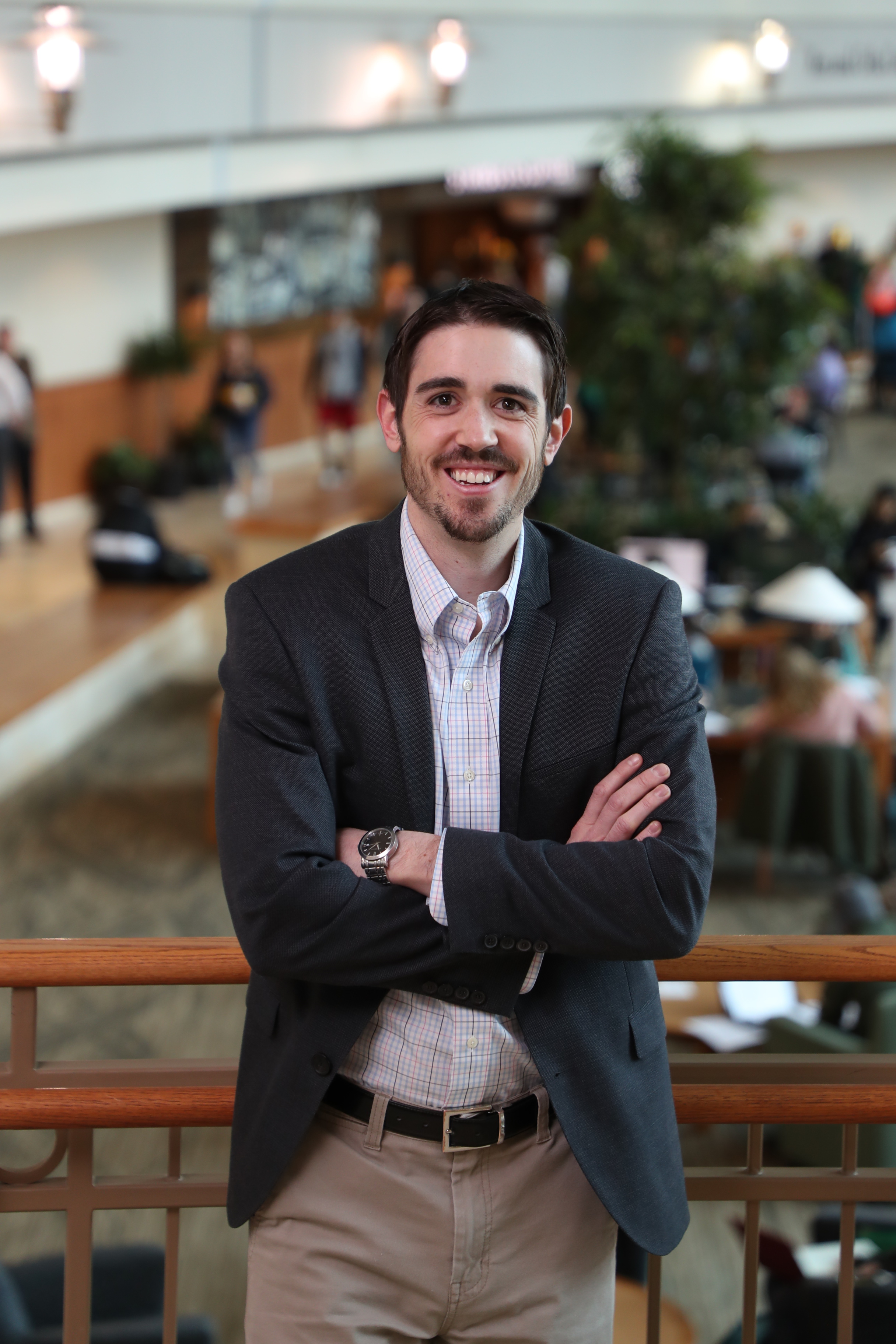
Professor of Psychology and Neuroscience
Dr. Michael Scullin is a Professor of Psychology and Neuroscience at Baylor University and an expert in cognitive aging. He completed his bachelor’s degree at Furman University, his PhD in the Behavior, Brain, & Cognition program at Washington University in St. Louis, and a post-doctoral fellowship in Neurology at Emory University School of Medicine. Dr. Scullin’s research has been covered by hundreds of media outlets such as the New York Times, Fox News, Good Morning America, Forbes, and Buzzfeed, and been supported through grants awarded by the National Institutes of H ealth, National Science Foundation, Templeton, and other organizations. His research and teaching have received dozens of honors and recognitions by universities, journals, and societies.