"Fossils Against Fossil Fuels: Bill McKibben on Why Seniors Are Climate's Secret Weapon"






Specifically for Seniors • Guest: Bill McKibben
About the GuestBill McKibben is a journalist, author of 20+ books, and professor at Middlebury College. He wrote the first major book on climate change in the 1980s and founded 350.org — the world's first global grassroots climate campaign — and Third Act, an organization mobilizing Americans over 60 on climate and democracy.
Episode Summary
McKibben joins host Dr. Larry Barsh to argue that cheap solar and wind power represent the most powerful climate tool humanity has ever had — and that older Americans are uniquely positioned to lead the fight.
The Solar Revolution.
About five years ago, solar and wind became cheaper than fossil fuels. China now installs 3 gigawatts of solar daily — one coal plant's worth every eight hours. California regularly generates 100%+ of its electricity from renewables, with batteries storing the surplus. Every tenth of a degree of warming we prevent matters: each pushes 100 million people from safe to dangerous climate zones.
Sunlight vs. Oil.
"Sunlight travels 93 million miles to reach Earth — none of them through the Strait of Hormuz." Oil is the truly intermittent energy source. A handful of drones can shut down global supply. Nobody can embargo the sun.
Batteries.
Lithium-ion batteries are recyclable. The total minerals needed for the renewable battery revolution through mid-century are less in volume than one year's global coal mining. Lithium lasts 25 years and can be reused. Coal gets burned once and requires constant replacement.
Health Costs.
Fossil fuels cause roughly 9 million deaths per year worldwide — 1 in 5 deaths globally. Canada's 2023 wildfires, driven by climate change, caused 80,000 US deaths from smoke inhalation alone. Home insurance costs are skyrocketing as climate risk makes underwriting nearly impossible.
Third Act & Senior Power.
With 120,000 members nationwide, Third Act is proving seniors are a political force. Recent wins: legalized plug-in balcony solar in Utah, Virginia, and Maine; won a clean-energy majority on Arizona's Salt River Project board (serving 2M people); launched Gray PAC and phone banks for key elections. The "Rocking Chair Rebellion" shut down big-bank branches in 100 cities to protest fossil fuel financing.
America's Self-Sabotage.
The first solar cell was invented at Bell Labs in 1956. The first industrial wind turbine was built in Vermont in 1943. These American technologies have been handed to China while the US rolls back clean energy policy — what McKibben calls "economic national self-sabotage" without precedent.
Legacy.
"We're in danger of being the first generation that left the world a lot worse off than we found it." Young people aren't just anxious about climate — they're anxious about being abandoned. McKibben's call: use the time, skills, and political power that come with age to organize, vote, and fight.
Key Quotes
"There is no known way to stop old people from voting. We come preloaded with real power."— Bill McKibben
"Solar energy takes power away from billionaires. That makes it ipso facto good."— Bill McKibben
"Sunlight travels 93 million miles to reach Earth — none of them through the Strait of Hormuz."— Bill McKibben"
There is no known way to stop old people from voting. We come preloaded with real power."— Bill McKibben
"We live in a world where billionaires have too much power. Things that take power and money away from billionaires are ipso facto good — and solar energy is one of them."— Bill McKibben
"We're in danger of being the first generation that left the world a lot worse off than we found it — which we do not want to do."— Bill McKibben
Resource
thirdact.org
350.org
Book: Here Comes the Sun by Bill McKibbenSpecifically for Seniors Podcast • Follow or subscribe wherever you listen
Sponsorship and advertising opportunities are available on Specifically for Seniors. To inquire about details, please contact us at https://www.specificallyforseniors.com/contact/ .
Disclaimer: Uedited AI transcript
Larry Barsh (00:07):
You are listening to specifically for Seniors, a podcast designed for a vibrant and diverse senior community. I'm your host, Dr. Larry Barsh. Join me in a lineup of experts as we discuss a wide variety of topics that will empower, inform, entertain, and inspire as we celebrate the richness and wisdom of this incredible stage of life.
Larry Barsh (00:40):
Welcome to specifically the seniors. I'm your host, Dr. Larry Barsh. Today we have a guest who has been described as one of the most important environmentalists alive, someone who's been arrested for his beliefs, harassed, doxed, and yet has never stopped showing up for the planet. Bill McKibben is a journalist and author of more than 20 books, a college professor at Middlebury College in Vermont, and the founder of not one, but two major organizations, three fifty.org, the first global grassroots climate campaign, and third act, an organization specifically built for people over 60 who want to take meaningful action on climate and democracy. His newest book is called, here Comes The Sun, A Last Chance For The Climate, and A Fresh Chance For Civilization. Bill, welcome to specifically for seniors. Now, what
Bill McKibben (01:45):
A pleasure to be with you, man. It's a real pleasure.
Larry Barsh (01:48):
Most climate conversations lately leave people feeling hopeless, but you are calling this a last chance and a fresh chance. What's genuinely happened that that gives you this real hope?
Bill McKibben (02:05):
Well, what's happened is that there's been a big fundamental change, <laugh>. About five years ago, we crossed some invisible line where it became cheaper to generate power from the sun and the wind than from burning coal and gas and oil. Suddenly these things that you and I have spent our lives calling alternative energy are no longer alternative. They're the obvious common sense, straightforward way to power the world, and that's beginning to play out in remarkable ways. You'd see it most obviously if you are in China, because that's where about 50% of this new clean energy has been built over the last three years, and they're building it at an astonishing rate. This time last year, the Chinese were putting up three gigawatts of solar panels a day, the gigawatts, the rough equivalent of a large coal-fired power plant. So they were building one of those every eight hours.
Bill McKibben (03:13):
That's energy transition on a scale that we've never seen before and on a pace that we've never seen before. You can see it some places here too. California now most days produces more than a hundred percent of its electricity for long stretches of the day from sun and wind and other renewable sources. At night, when the sun goes down, the biggest source of supply to the grid in California are batteries that sent, spent the afternoon soaking up excess sunshine batteries that didn't exist even a few years ago. Texas has now surpassed California as the state that's building this stuff fastest. So there's a real sea change underway here. Two things about that. One, it isn't enough to stop global warming. Sadly, it's too late for that, but not too late to start shaving tenths of a degree off how hot the planet eventually gets.
Bill McKibben (04:22):
And every 10th of a degree that we raise the temperature moves a hundred million of our brothers and sisters from a safe climate zone to a dangerous one. So this is really important. Second thing about it is, while it's good news for you and me, it's bad news if you own an oil well or a coal mine, which is why these guys have scrambled to try and game our political system to slow down this transition, it's not slowing it down in most of the world, but in America it clearly is. The Trump administration has shut down, mostly finished wind farms off the coast of New England. It's put all the federal lands off limits to solar panels, you know, on and on and on. So we have our work cut out for us in this country. Anyway,
Larry Barsh (05:13):
Let me get back to that line that is going around the internet. When the straight offor moves was shut down, gas prices exceeded four bucks a gallon. You wrote something that stopped me cold. You said sunlight travels 93 million miles to reach Earth, none of them through the strait of hormones. <Laugh>, yeah. Can you walk us through that line? Yeah,
Bill McKibben (05:44):
Absolutely. Because the last six weeks have revealed extraordinary things about our planet and its future. As long as we remain dependent on fossil fuel, that's only available in a few places, the people who control those places end up with too much power and wealth, which they routinely abuse. Vladimir Putin uses his winnings to invade Ukraine, you know, the king of Saudi Arabia, whoever. It's, but it also is inherently unstable because again, it depends on a few places. So Iran, even though we, as the president keeps hosting, had defeated its Navy and defeated its Air Force had, you know, if they have 10 drones, that's enough to close the strait of hor moose and stop the flow of much of the world's oil and gas, and it's causing havoc everywhere. So you've probably heard people say, well, renewable energy, sun and wind power are, they're intermittent, they're not reliable. The sun goes down, the wind drops. That's no longer a real problem because batteries, and we can talk about this, have changed that fact. But what we're really coming to understand is that oil is the intermittent power. Nobody can cut off the supply of sunshine <laugh>. But you, you know, the Iranians, it turns out with, you know, a few thousand guys are able to disrupt the entire world economy, and there's nothing that even the most powerful military in the world can do about it.
Larry Barsh (07:34):
You, you mentioned the word batteries. Doesn't that bring up another problem? What to do with the expended batteries?
Bill McKibben (07:42):
Yeah. but happily it's a problem with an answer. The kind of batteries we're building now, lithium ion batteries, sodium ion batteries, things like that, the ingredients in them are valuable enough that if the battery degrades, we just open 'em up and recycle it and cut the lithium out and start over again. The Rocky Mountain Institute, Emory Levin's operation there in Colorado, did a study last year indicating that all the minerals that we would need for the renewable battery revolution by the middle of the century were less in volume than the amount of coal we mined last year on this plant. Hmm. So the, if you think about it, this shift is powerful. You know, if you mine some lithium, it lasts for 25 years and then you can recycle it. If you mine some coal, what do you do with it? You set it on fire and you have to go mine some more. Tomorrow
Larry Barsh (08:42):
You found it. Third act for Americans over 60. And since this podcast is basically aimed at older adults, what can we do?
Bill McKibben (08:54):
Well, so this is a key question. We started third act because we were convinced that old people were ready to take progressive action to defend the climate and to defend the democracy. Those are the two areas in which we work. People told us we were wrong, that people became more conservative as they aged, but we were guessing that that wasn't true, at least for this generation. 'cause If you're in your third act now, if you're in your seventies or eighties, your first act was during that period of tremendous social, political, cultural change in the 1960s and 1970s. You have some muscle memory of that ferment. And as it happened, we were right, four years on, we've got about 120,000 people very, very powerful working groups in most of the states in the union. And those working groups take advantage of the fact that older people have lots of time, lots of skills, lots of connections, and that politicians are afraid of them because they know the voting patterns of American demographics.
Bill McKibben (10:12):
There is no known way to stop old people from voting. Okay? So we come preloaded with real power, which we've been developing and using in the fight around energy. Last year we hosted this big nationwide thing called Sun Day, where we had 500 events celebrating renewable energy around the country. And out of that came this legislative push since we can't do anything in Washington at the moment and state capitals to make it much easier to permit solar rooftops and to build what we call balcony solar or plugin solar, something that's standard now in Europe it's just a cheap solar panel designed to be hung from the railing of an apartment balcony or something on the back. There's a plug, you just stick it in the wall, no electrician needed, produces 20%, 25% of the energy and apartment uses illegal in this country, but less so now. We've convinced Utah, Virginia, and Maine in the last few weeks to legalize this stuff, and we'll have a lot more before the spring is out. So these are things that older Americans are spearheading this year on precisely these topics. And if you're interested in this work or any of the other work we do around democracy and things, then go to third act.org and check it out.
Larry Barsh (11:45):
Yeah. You mentioned voting. The administration seems to be doing everything it can to stop the senior vote by trying to eliminate mail-in ballots.
Bill McKibben (12:00):
Exactly right there. Our, our, I mean, look, part of our problem is that we find it, I find it sort of hard to believe the stuff that's going on and just 'cause it's so weird. Older people actually have an advantage in understanding that if you're 23, you know, Donald Trump's been around your whole life, so he, you may not like him, but he seems sort of normal to you. For those of us who have 15 presidents in our lifetimes, we understand that he's utterly different from everything. I mean, there've been presidents I didn't much care for before, but there have never been anything, any remotely like this. So, what we've been doing at third act to help people understand that we're about finishing up this series of interviews with some of our oldest members, those in their eighties and nineties. As you know, this is the 250th anniversary of the country.
Bill McKibben (12:59):
So if you're 83, you've been around for one third of American history. And what we want is to get those people kind of testifying about how abnormal this time is. And they've been very moving. I mean, I was talking recently with a woman who said, I lost my sister to polio when I was four, and I was in the first crop of people who rolled up our sleeves to get the polio vaccine. And I hate the fact that now our government's messing around with vaccinations. I never dreamt that we would come to this. You know, things like that. So it's really important for us to get that message out in part because it allows other seniors to see, to feel, to remember what a strange moment this is, and to vote hopefully accordingly.
Larry Barsh (13:53):
That brings up two points. Many of our listeners are old enough to remember when Jimmy Carter put solar panels on the White House and then watch Ronald Reagan take them off here. We're at, we're at the same point again, it seems
Bill McKibben (14:12):
History repeats itself. The difference is this time that the solar panels are so cheap that Donald Trump is costing us huge amounts of money when he tears them down, when he prevents them from being built. The whole rest of the world is busy building out this stuff, and they're using what was originally American technology to do it. The first solar cell was invented in 1956 at Bell Labs in Edison, New Jersey. I bet that there are people listening to this podcast who are old enough to have been putting dimes in payphones in the 1950s. And if you did, then you helped fund the development of the first solar cell. 'cause That was all at Bell Labs. The first industrial wind turbine in the world was in 1943 during the war in Vermont, not far from me. We've now taken these technologies and handed them over lock, stock, and barrel to our theoretical main adversary, the Chinese. I don't think there's ever been an active economic national self-sabotage quite like this in our history or anyone else's history. And I'm enough of an American patriot that it annoys the hell outta me. I, you know, I grew up in Lexington, Massachusetts, giving tours of the battle green. I wore my tricorn hat and told the story of the beginning of the American Revolution. So I take this stuff seriously, and it feels to me like these guys are almost treasonous in the way that they're just handing over our kids' future to the Chinese.
Larry Barsh (15:58):
And not only that, the second point you brought up was with illness. How many people a year are dying from fossil fuel air pollution?
Bill McKibben (16:10):
We think around the world, 9 million deaths a year. So about one death in five are attributable to breathing the combustion byproducts of fossil fuel, the stuff in smoke that particulates that lodge in your lungs. And a lot of that's in Asia where the air is dirtiest. But a lot of it's here, too. There was a study yesterday, you remember the wildfires in 2023 up in Canada that spread smoke across so much United States? Yep. There's a big new study in the journal nature that shows that cost 80,000 lives from people breathing that smoke, which we only got because we have climate change. You know, those forests used to be much too far north and much too cold and wet to ever burn, but not anymore. So yeah, the health costs are enormous. And the costs in so many other ways of fossil fuel are enormous.
Bill McKibben (17:07):
So think about, say an American household budget. The thing that's going up fastest right now is the cost of insurance for your home. And that's going up so fast much faster than inflation because we've created such enormous climate risk that the insurers can't figure out how to, you know, if the chance that your house is gonna burn down or get flooded is so much higher than it used to be, that the whole system's outta whack now. So all this stuff comes with a huge cost, and we can get around that by switching to clean cheap renewable energy. The only people who don't want us to are the oil companies <laugh>. So we've gotta muster our courage to go up against 'em. Last night in Arizona, we got the election result from the biggest, one of the biggest public utilities in the country, what's called the Salt River Project that serves about 2 million Arizonans.
Bill McKibben (18:12):
And there'd been a big campaign to put clean energy advocates on its board, and a very big counter campaign from the right wing to block that turning Point. USA Charlie Kirk's group was working very hard to block those people. We won that election last night to stiping out spent 10 to one. And so there's now a clean energy majority on that board, and that's a very good thing for the very many older people that live in the Valley of the Sun there around Maricopa County. Because now they'll have access to clean energy that they've been denied.
Larry Barsh (18:57):
And the need for electricity is, is expanding tremendously with the development of ai. So we're gonna need more.
Bill McKibben (19:07):
Yes. Need some, I, I doubt we'll need, I, I doubt we'll end up using as much for that as people talk about. But the thing we really need electricity for is the development of electric vehicles and heat pumps for your house. And these are much, much, much better uses of energy. I, I don't know whether you've ever driven an EV or not. I've been driving one for many years, and it's a way, way, way better car than what one had what I have or had quiet. If you wanna accelerate, it goes much faster <laugh> than internal combustion engine car. And it has almost no moving parts. There's essentially no maintenance. And I don't care that the price of gasoline is $5 a gallon now because I have solar panels on my roof and they hook up to my car <laugh>. I'm sitting pretty, you know. So it, it, it, it's, it's a, it's potentially a new world out there.
Larry Barsh (20:10):
I have a a plugin hybrid. Nice. So it was the best I could do for right now. There, there aren't enough power stations around where I am, so
Bill McKibben (20:24):
It's coming fast and it could come faster. So we will keep working on it.
Larry Barsh (20:30):
Let's talk about your book for a minute. Here comes the Sun the subtitle. A Last Chance for Climate and a Fresh Chance for Civilization. Two Big Ideas. Tell me about it.
Bill McKibben (20:45):
Well, climate change is where I've spent my life's work. I, I wrote the first book about what we then called The Greenhouse Effect back in the 1980s. And I've spent my life organizing going to jail. What are all the things you need to do to try and draw attention and action to this problem? But finally, we have a big scalable tool that gives us a real opportunity here. Cheap solar power. And by solar power, I also mean wind. The wind is just a function of the fact that the sun heats the earth differentially producing those breezes that turn those majestic turbines. You know, that's the weapon that we have to try and fight climate change as best we still can. And as for civilization, this is what we were talking about earlier, the way that so much power is so concentrated in so few hands. But we can start to change that because energy is from the sun, and the wind is available to everyone, everywhere. Poor people rural people, people, you know, of all kinds. And, and that makes a huge difference. We could start reorganizing. I, I mean, I, I'll tell you my opinion. We live in a world where billionaires have too much power. And so things that take power and money away from billionaires are ipso facto good <laugh>, and Solar energy is one of 'em.
Larry Barsh (22:21):
Your other organization, three fifty.org, what is it?
Bill McKibben (22:28):
We founded three fifty.org with a bunch of college students about 20 years ago, and it became the first big global grassroots climate campaign. It works all over the world. We've organized about 20,000 demonstrations in every country on Earth except North Korea. And it's been crucial in kind of highlighting the climate danger that we face and building action around it. It works in lots of different languages, <laugh>, lots of different places,
Larry Barsh (23:01):
Places. I'm I'm still interested in what you said about China. It's the world's largest builder of solar and wind power, and it's still building more coal plants. How does this dichotomy work?
Bill McKibben (23:20):
So, China is still building coal plants, but they're using them less and less. And in fact, the, the a number that they're building is dwarfed by the amount of sun and wind power that they're using on any given day. They use the cheapest available energy, and that's the stuff that comes from the sun and the wind. The coal plants were filling the kind of need for reliable power, but that need increasingly is being filled by batteries. So China's coal consumption is dropping now, and so are, its total carbon emissions, even as Americas continue to rise. So it's a big change moment in the world. And as I say, I'm afraid that we're letting China get the upper hand here going forward.
Larry Barsh (24:09):
So what can we do as citizens facing this administration we have now, and the Psychopathic acts of Congress, <laugh> just support it. It, it's,
Bill McKibben (24:28):
The only thing that we can do is come together and organize. And that's why we started third act. There's no shortcuts around this. If you are unhappy with the people in power <laugh> and what they're doing, then you have to organize to get them out. Now, some of that is the stuff we're doing out in the streets. No King's Day, that's been really important. And if you've been to one of them, you've noticed that there's an overrepresentation of people with hair lines like your and mine. You know, and that's good. Older people are stepping up and doing their work, but in the streets by itself is not sufficient. That's why we're also organizing around these elections. And we know how to get people, how to say you live in a blue state where you're confident you're candidate's gonna win, or you live in such a deep red state that you have no choice, no chance of, you know, prevailing.
Bill McKibben (25:23):
We've set up all these phone banks and things to allow you to work in other places to make a difference in their elections. That's one of the reasons we won this fight in Arizona last night. We've also <laugh>, we've also set up a pack just like the oil companies and things, but ours is a political action committee, but ours is called Gray Pack. And it it works to support the interests of older people as they try to stand up for climate and democracy and as they try to get behind the work of young people. One of the things, Larry, that we do politically is <laugh> try to use our power as seniors to remind some of our very senior elected officials that it's okay if they step down and let some younger people do this too. That they could still have a political voice through things like third act. They don't need to be clogging up the Senate all the time, you know? And I think it's easier for us to say that than it is for younger people, where it might sound ageist or something. So we play lots of roles as we organize, and we're very keen on organizing ahead of this November's midterm elections. We think that if they go badly, they might be the last elections we get. So we wanna make sure they don't go badly. We
Larry Barsh (26:53):
Have a responsibility to our children and grandchildren and further on down the line.
Bill McKibben (27:00):
Amen. You know, we hear a lot about how climate anxiety is affecting young people, and it is, and you talked to, I talked to lots and lots of young people about this, and yes, they're anxious about what's happening with the climate, but what they're really anxious about is the idea that they've been pretty much abandoned to deal with it on their own <laugh>. And, you know, that older people took most of the gravy and, you know leaving the bones behind for them to deal with. And that's not fair. And it's not what we want. I don't think you know, as you get older, as you get nearer to the exit, than the entrance you you start to think more about things that you didn't think about when you were young, your legacy, you know, which basically means the world you leave behind for the people you love the most.
Bill McKibben (27:55):
And we're in danger of being the first generation that left the world a lot worse off <laugh> than we found it, which we do not wanna do. So with what time we have left, we mobilize and organize and lobby and educate, and we've got lots of resources to do that with. It's a good idea to try not to take yourself so seriously. I remember the first demonstration we did on climate stuff at third act was because a bunch of high school kids had called up me and said, we want to take on the big banks, Citibank, Wells Fargo, bank of America, that are the big funders of the fossil fuel industry. We want to take 'em on, but we're in high school. We don't have checking accounts, we don't have credit cards. Will you help? And, and I was like, well, if there's one thing we have, it's credit cards, so yes, we will help.
Bill McKibben (28:46):
And I remember that demonstration 'cause there were three or 400 high school kids there. They know just what the problem is, and they're somewhat ryer. So they were at the head of the march, but at the back of the march, there were a bunch of us from this new third act, and we just had a big banner that said fossils against fossil fuels. And all the kids who saw it were kinda laughing and, you know, high fiving us and whatever. But they were also really happy to see us standing with them. We've gone on to do lots of work like that. In fact, we did all this civil disobedience outside these banks in a hundred cities on the same day, shut them down. We're too old to do the kind of sit-ins of our youth where you just sprawl on the concrete. My bones won't support that anymore. So we'd gone to Goodwill and we'd gotten all the rocking chairs we could find, and that's what we used to shut down the banks. The New York Times called it the Rocking Chair Rebellion. So we're, we're doing what we can.
Larry Barsh (29:56):
I know we've got a a time constraint. Yes. Just one quick question. What keeps you up at night?
Bill McKibben (30:02):
What keeps me up at night is the strange horror of this unfolding you know, administration and the fact that it's keeping us from dealing with the climate crisis. But what puts me back to sleep at night is the fact that we have a technology that we can use. We have an opening and we have to seize it. And I'm afraid I have to seize the moment and go. But I'm grateful to you for the work that you do and for this outlet, thank you very much for pioneering this work and bringing together seniors across the country. Nothing could be more important.
Larry Barsh (30:44):
Thanks, bill. Thanks so much for coming on specifically for seniors.
Announcer (30:55):
If you found this podcast interesting, fun or helpful, tell your friends and family and click on the follow or subscribe button. We'll let you know when new episodes are available. You've been listening to specifically for seniors. We'll talk more next time. Stay connected.
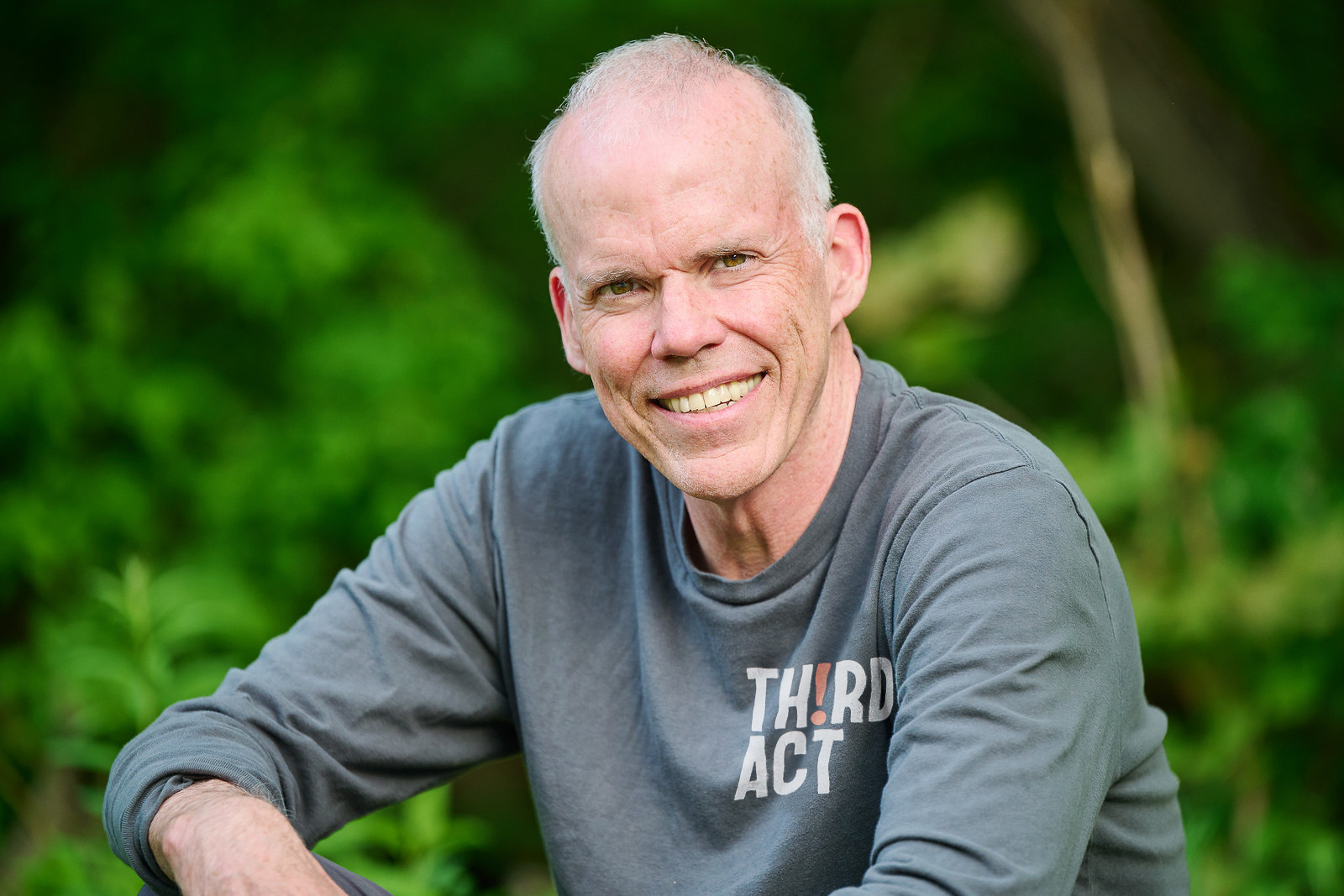
Bill McKibben is a contributing writer to The New Yorker, and a founder of Third Act, which organizes people over the age of 60 to work on climate and racial justice.
He founded the first global grassroots climate campaign, 350.org, and serves as the Schumann Distinguished Professor in Residence at Middlebury College in Vermont. In 2014 he was awarded the Right Livelihood Prize, sometimes called the ‘alternative Nobel,’ in the Swedish Parliament. He's also won the Gandhi Peace Award, and honorary degrees from 19 colleges and universities.
He has written more than twenty books about the environment, including his first, The End of Nature, published in 1989, The Flag, the Cross, and the Station Wagon: A Graying American Looks Back at his Suburban Boyhood and Wonders What the Hell Happened, and his latest book is Here Comes The Sun.