The Empty Podium
5 Takeaways From Trump’s Address on Iran
More than a month into the war in Iran, President Trump gave a prime-time address to the nation on Wednesday to make the case for why he believes the conflict is necessary.
In a 19-minute speech from the White House, Mr. Trump said Iran’s missiles and drone systems have been “dramatically curtailed and their weapons factories and rocket launches are being blown to pieces.”
Although the U.S. and Israeli militaries have destroyed many of Iran’s ballistic missiles and launchers in airstrikes, Iran continues to fire missiles in the region.
Still, Mr. Trump described the military action as a major success and called on Americans, who are uneasy about its costs, to keep things in perspective. He estimated that the war should wind down within three weeks.
New York Times April 2, 2026
Word Count 1,176 words Reading time ~5 minutes
My Opinion:
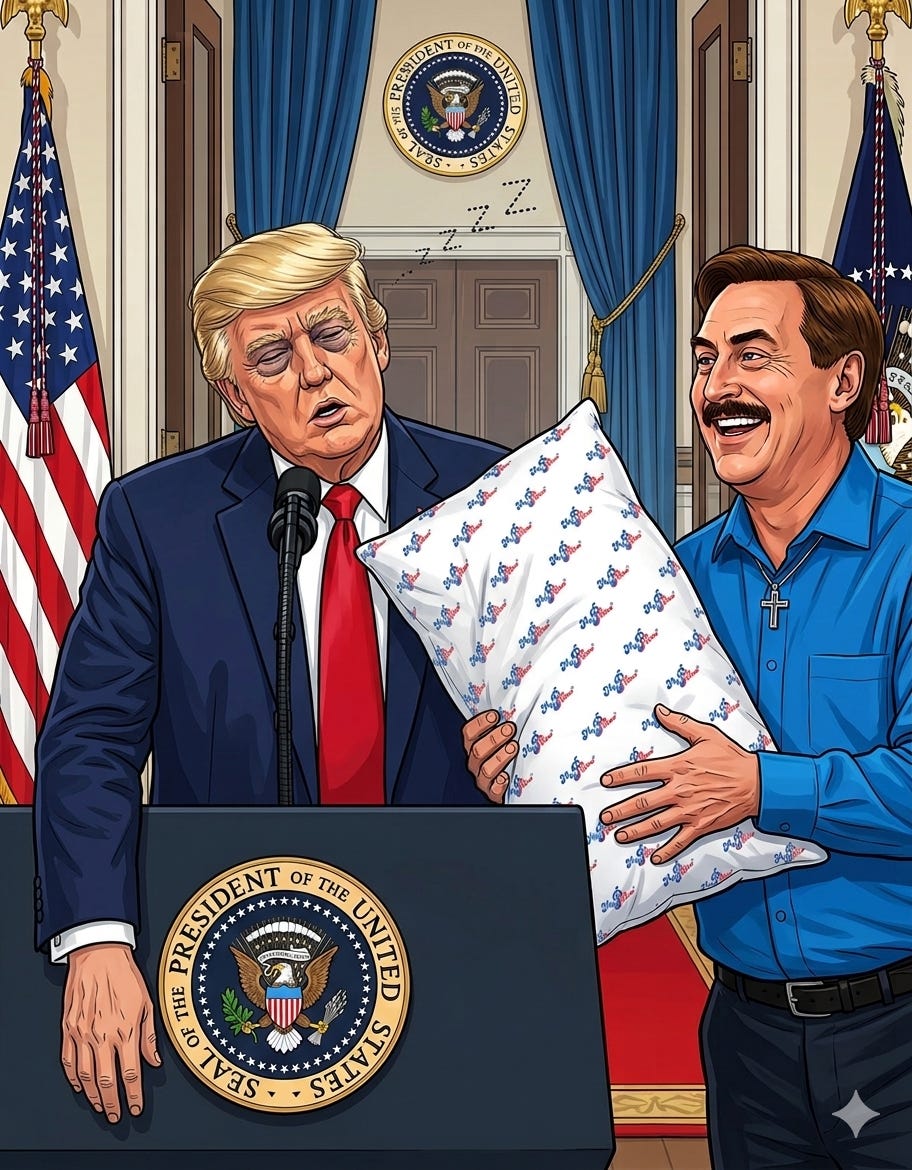
There was a moment, sometime in the middle of Donald Trump’s primetime address to the nation on Wednesday night, when the silence of what was not happening became louder than anything being said. No crowd. No ad-libs. No veering off script to tell a story about someone he met, or to mock a political enemy, or to bask in the kind of spontaneous showmanship that has defined his public persona for a decade. Just a man at a podium, reading words off a teleprompter in a flat, hurried monotone, his eyes heavy, his affect absent.
If you didn’t know better, you might have thought you were watching someone read the minutes of a municipal planning meeting.
This was supposed to be a consequential speech. The White House had billed it as an “important update” on Operation Epic Fury — the month-old U.S.-Israeli war against Iran that has sent oil prices soaring past $100 a barrel, rattled global markets, and left the American public increasingly anxious and unconvinced. The stakes could hardly have been higher. And yet the man tasked with making the case arrived appearing to have left his conviction somewhere else entirely.
A Speech That Said Nothing New
Let’s start with the content — or rather, the lack of it. The address ran just under 20 minutes, and in that time Trump offered the nation exactly what he has been offering for weeks: the war is necessary, the war is being won, the war must continue, and the war will be over soon. As Al Jazeera noted, these were “all arguments he has been making daily” — recycled talking points dressed up in primetime lighting.
Analysts across the political spectrum had anticipated either a major announcement of military escalation or the beginning of a drawdown. Instead, as CNN’s Alayna Treene reported, the speech “ended up being more of a sales pitch” — an attempt to rally a public that, by every available measure, has already made up its mind.
That public is not buying it. A recent YouGov poll found support for the war among Republicans had collapsed from 76 percent in early March to just 61 percent — a stunning erosion in a matter of weeks, driven largely by pain at the gas pump and the grocery store. Trump’s overall approval rating has hit a new low. The speech was, at its core, a political rescue mission. And it failed.
The Staging Said Everything
But it wasn’t just what Trump said, or didn’t say, that told the story. It was where he stood — and what he chose not to do.
Presidential communication is as much theater as substance, and the stagecraft on Wednesday night sent a message Trump almost certainly didn’t intend. He stood at a formal lectern in the Cross Hall of the White House, flanked by flags, backed by curtains, speaking at the country rather than to it. It was a setting suited for announcements — victories, declarations, summits concluded. It is emphatically not the setting you choose when your primary job is to reassure a frightened and frustrated public that their sacrifices mean something.
That job calls for the Resolute Desk.
Franklin Roosevelt understood this instinctively. His fireside chats worked because they collapsed the distance between the presidency and the living room — the president wasn’t addressing the nation, he was talking with it. The desk setting signals intimacy, accountability, personal investment. It says: I know this affects you, and I am speaking directly to you.
The podium says something different. It says: I am making a pronouncement. It is cold, formal, and impersonal — precisely the wrong register for a president trying to hold together a war-weary coalition whose members are paying $5 a gallon to fill their tanks. It says “f*ck you and your problems” to the American people.
Whether the staging was a strategic miscalculation or a reflection of genuine indifference is, in some ways, a distinction without a difference. The effect was the same: a president who looked like he was fulfilling an obligation rather than answering a calling.
The Lethargic President
MS NOW’s opinion coverage described what viewers saw as a “decidedly lethargic president” — and that word, lethargic, is worth sitting with. This is a man whose entire political brand has been built on energy, on the untelegraphed eruption, on the rally that runs two hours because he’s enjoying himself too much to stop. The absence of that energy isn’t neutral. It registers. It communicates.
Eyes half-closed through much of the address. No departure from the script. No moment where the real Donald Trump — whoever that is at any given moment — broke through the prepared remarks to say what he actually thinks. Just the words on the screen, delivered as though the exercise itself was tiresome.
The Hill noted that the speech contained “virtually nothing in terms of specificity” about how or when the war would end, and characterized much of the rhetoric as “little more than a repetition of things he has already said or posted on social media.” Reuters observed that “often conflicting signals” throughout the conflict had “only added to confusion,” with Trump at one moment calling for diplomacy and the next threatening to bomb Iran’s electrical grid into rubble.
None of that contradiction was resolved on Wednesday night. No exit strategy was offered. No concrete benchmark for success was defined. Just the promise that it will all be over “very shortly” — a phrase that has been uttered so many times now that it has ceased to mean anything at all.
The War He Doesn’t Want to Explain
There is a deeper problem lurking beneath the performance, and it may explain the flatness of it. This is, as one commentator put it, a “war of choice” — a conflict that Trump started without consulting Western allies, without a clearly defined exit, and without fully preparing the American public for its costs. Making the case for it, at this point, requires either genuine conviction or extraordinary salesmanship. On Wednesday night, Trump displayed neither.
The irony is that his supporters have long wished he would be more disciplined, more on-script, more “presidential.” They got that Wednesday night. But discipline without passion isn’t leadership — it’s compliance. And a president who appears to be complying with the demands of his own office rather than inhabiting it is not a reassuring sight when the country is at war.
Whether Trump is tired, disengaged, or simply out of arguments, the effect on the viewer is the same. The man at the podium looked like someone who had already moved on — someone content to let events unfold while he collected the credit and waited for someone else to figure out the ending.
We, the American people, paying for this war at the pump and in the produce aisle, deserve better than that.
We deserve a president who seems to understand that.
We deserve a president who seems interested in the job, not in how much wealthier he becomes.
FTS
Join us on our podcast Specifically for Seniors, where satire meets substance and storytelling sparks civic engagement. Each episode dives into topics like authoritarianism, political spectacle, environmental justice, humor, history and even fly fishing and more—layered with metaphor, wit, and historical insight. We feature compelling guest interviews that challenge, inspire, and empower, especially for senior audiences and civic storytellers. Listen to the audio on all major podcast platforms, watch full video episodes on YouTube, or explore more at our website.
Let’s keep the conversation sharp, smart, and unapologetically bold