The Powerlessness Paradox: What Happens When Democratic Tools Feel Inadequate
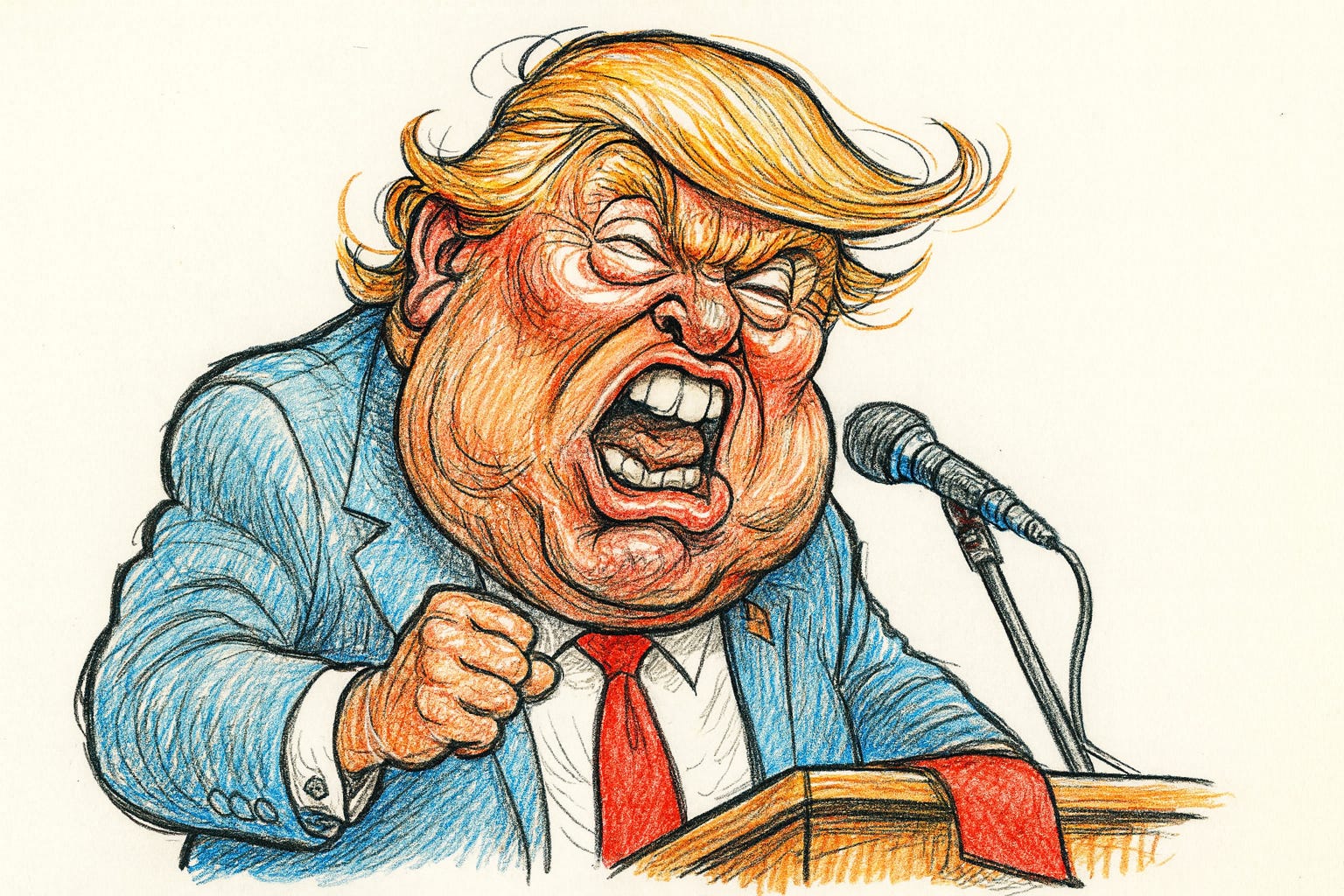
There’s a particular kind of civic despair that comes from watching what you believe to be the dismantling of democratic norms and finding yourself armed only with postcards, protests, and voting booths. It’s the frustration of urgency colliding with institutional inertia, of seeing threats that demand immediate action while the tools available to you operate on timescales measured in election cycles and legislative sessions.
The question of whether Donald Trump’s actions constitute betrayal, treason, or something else entirely has consumed American political discourse since January 6th and beyond. But beneath the semantic debates about proper terminology lies a more fundamental crisis: what happens when citizens become convinced that democratic institutions are failing to protect democracy itself?
Consider the case against Trump from the perspective of his harshest critics. The attempts to overturn the 2020 election through pressure campaigns on state officials, the scheme involving alternate electors, the phone call demanding Georgia “find 11,780 votes”—these weren’t merely aggressive legal challenges but efforts to subvert the peaceful transfer of power through extralegal means. On January 6th itself, the multi-hour delay between violence erupting at the Capitol and the president telling rioters to go home suggests, to many observers, a leader who didn’t oppose the disruption of constitutional processes or perhaps welcomed it.
Beyond that single day, critics point to a broader pattern: consistent deference to Vladimir Putin over American intelligence agencies, skepticism toward NATO that serves Russian strategic interests, the withholding of Ukraine aid, climate change denial that cedes technological and diplomatic leadership to other nations, medical policies that undermined public health institutions. Whether through ignorance, ideology, self-interest, or authoritarian instinct, these actions seem designed to benefit foreign adversaries and harm long-term American strategic positioning.
Perhaps most revealing is Trump’s apparent conviction that the only limits to his presidential power are the boundaries of his own morality and judgment. This belief—that he can do anything he deems appropriate without institutional or constitutional constraint—represents either a fundamental misunderstanding of the American system of government or a deliberate rejection of it. The Constitution wasn’t designed to rely on the personal virtue of any individual leader; it was explicitly structured with checks and balances precisely because the founders didn’t trust any person to be the sole arbiter of their own authority. When a president operates as though legal restraints, congressional oversight, and judicial review are merely suggestions he can ignore based on his personal assessment of what’s right, it suggests either profound ignorance of constitutional norms or a complete indifference to them. This mindset alone raises serious questions about mental competency and fitness for office—not in a clinical sense necessarily, but in the fundamental sense of whether someone who doesn’t grasp or doesn’t accept the basic architecture of constrained executive power can legitimately hold that office.
The challenge is determining what drives these decisions. Is it cognitive decline and a personality structure that can’t distinguish between personal benefit and national interest? Pure financial self-dealing, using the presidency to enrich himself and avoid legal consequences? Genuine ideological conviction that nationalist, anti-establishment instincts serve ordinary Americans? Authoritarian attraction to strongman governance? Most likely, it’s some toxic combination—a person driven by ego and self-preservation, with genuine resentments and beliefs, whose cognitive style prevents self-reflection, creating conditions where he can simultaneously grift, believe his own mythology, and pursue unchecked power while casting himself as the hero.
But here’s where the uncertainty becomes paralyzing: not knowing which of these explanations is true makes it nearly impossible to know what kind of response is effective. If it’s psychological decline, you’d invoke the 25th Amendment, but he removes anyone who might constrain him. If it’s pure self-interest, legal accountability becomes central, but he’s now largely immune from consequences. If it’s genuine authoritarian intent, you’d need to defend democratic institutions proactively, but institutions can only resist so much when the executive branch actively undermines them.
And this is where the powerlessness becomes most acute. We can protest. We can contact representatives. We can send postcards and make phone calls. But aside from voting at prescribed times, ordinary citizens are incapable of direct action like impeachment and removal from office. Those mechanisms require institutions—Congress, the Cabinet, the courts—that seem either complicit, paralyzed by partisanship, or structurally incapable of acting quickly enough to address threats that unfold in real time.
The brutal reality: impeachment requires a Congress that won’t convict if controlled by his party. The 25th Amendment requires a cabinet he appointed. Courts move slowly and have granted broad immunity. Elections are years away and feel inadequate when damage accumulates daily. Protests can be ignored if they don’t translate into institutional pressure. Letters to representatives who already agree are preaching to the choir; letters to those who don’t are often filed away and forgotten.
This reveals something uncomfortable about democratic systems. They’re designed with deliberate friction to prevent rapid, dramatic change, which protects against coups and mob rule but also means they struggle to respond to threats that emerge from within the system itself, especially from someone who’s learned to exploit every loophole and delay tactic. The very safeguards meant to preserve democracy can become obstacles to defending it.
If traditional democratic participation feels insufficient, what remains? History offers some answers: mass sustained movements involving prolonged civil disobedience can create ungovernable situations that force change. General strikes and economic pressure can impose costs that become unsustainable. State-level resistance can become so comprehensive it functionally limits federal power. International pressure from allies can delegitimize actions and constrain options. But these require massive coordination, personal sacrifice, and risk that’s genuinely difficult to mobilize when people have jobs, families, and daily survival to manage.
And here we arrive at democracy’s most profound paradox: when you become convinced that democratic procedures won’t save democracy itself, you face an impossible choice. You can accept the system’s collapse while respecting its processes. You can act outside normal channels to preserve the system, which itself undermines democratic legitimacy. Or you can maintain faith in institutions even as they appear to fail, hoping that enough people within them will find courage at critical moments.
There’s no clean resolution to this dilemma. The people who stormed the Capitol on January 6th also believed they were taking necessary action to save the country from an existential threat. The difference, of course, is that their beliefs were based on fabricated claims of a stolen election, while concerns about Trump’s documented actions rest on observable evidence. But it illustrates how dangerous the logic of “emergency justifies circumventing normal processes” becomes, even when the emergency feels real.
What makes this moment so difficult to rationalize is the collision between urgency and constraint. When you believe action must be taken immediately to preserve constitutional democracy, but the Constitution itself offers no mechanism for immediate action by ordinary citizens, you’re left in a kind of civic limbo. Too patient and the threat may become irreversible. Too impatient and you risk becoming the thing you’re fighting against.
Democracies that survived authoritarian threats historically did so through some combination of institutional actors finding courage at critical moments, economic or political costs becoming unsustainable for those in power, sustained mass pressure making governance impossible, or sometimes external intervention. But many democracies didn’t survive. There’s no guarantee that good intentions, correct analysis, or even majority opposition is enough.
This leaves those who see the current moment as genuinely threatening in an extraordinarily difficult position—living with the awareness that the tools available may be inadequate to the threat perceived, that the urgency they feel has no corresponding mechanism for immediate response, and that maintaining democratic legitimacy might require accepting outcomes they believe will destroy the very system they’re trying to protect.
It’s not a question with satisfying answers. It’s simply the reality of trying to defend democracy using only democratic means, when those means were designed to move slowly and the threat moves fast. The frustration isn’t a sign of giving up. It’s a sign of taking the problem seriously enough to recognize its true difficulty.
FTS
This space isn’t meant to be a monologue. It’s a dialogue — sharp, satirical, and sometimes uncomfortable. Do you agree with the stance? Disagree with the framing? See illusions I’ve missed? Add your voice. Comment, challenge, expand, dismantle. The sharper the exchange, the clearer the vision. Disillusionment isn’t passive; it’s participatory.
Join us on our podcast Specifically for Seniors, where satire meets substance and storytelling sparks civic engagement. Each episode dives into topics like authoritarianism, political spectacle, environmental justice, humor, history and even fly fishing and more—layered with metaphor, wit, and historical insight. We feature compelling guest interviews that challenge, inspire, and empower, especially for senior audiences and civic storytellers. Listen to the audio on all major podcast platforms, watch full video episodes on YouTube, or explore more at our website.
Let’s keep the conversation sharp, smart, and unapologetically bold.